Updated November 2026 · Research-based guide · We may earn a commission from links on this page.
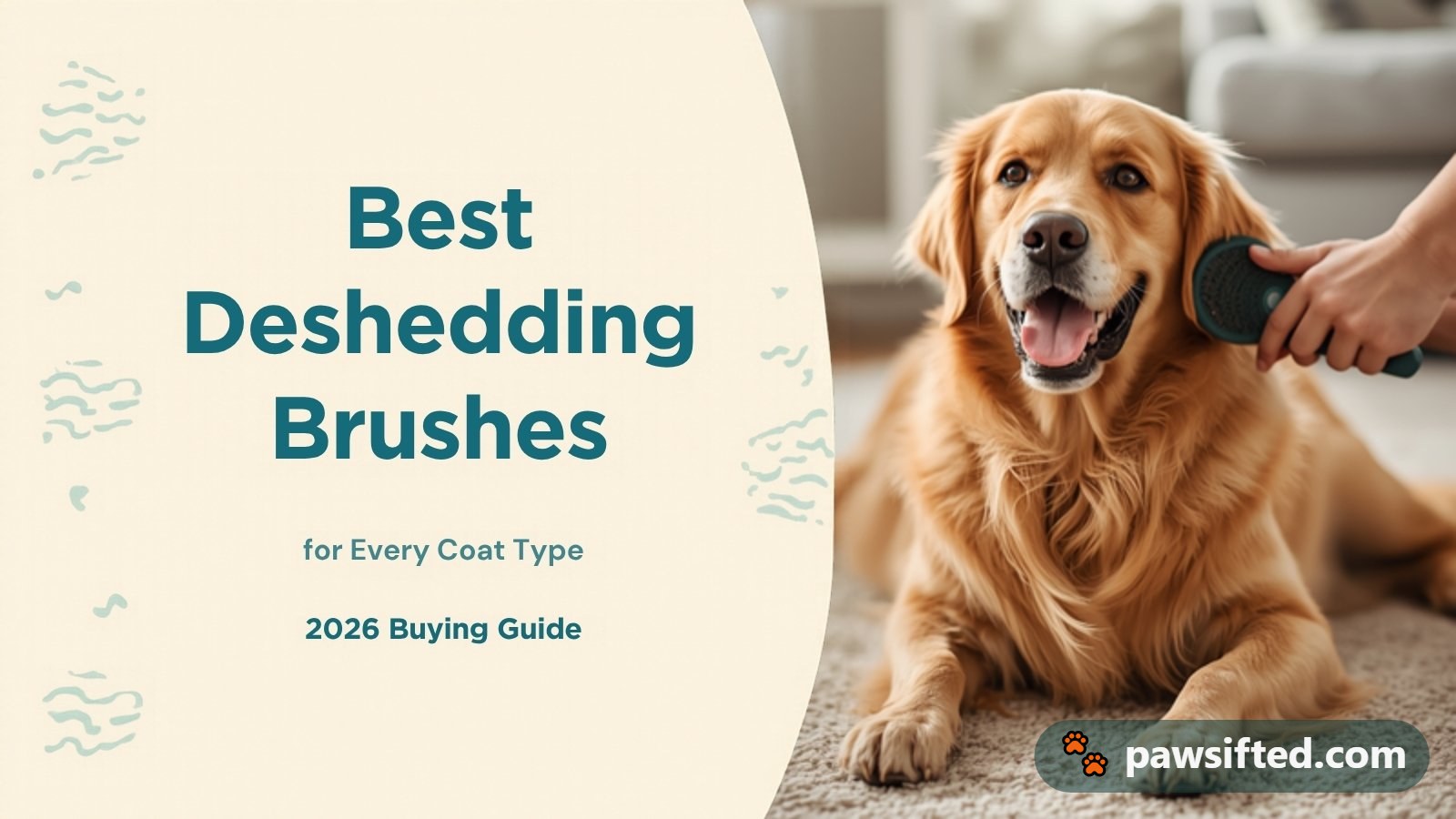
If your couch, car seat and black jeans all wear a fine layer of dog hair, you already know brushing is the only real fix. Getting loose undercoat out on purpose, a few times a week, means far less of it ends up on the floor. The catch is that the best deshedding brushes for one dog can be useless, or uncomfortable, for another.
A thick double coat like a Husky or Golden Retriever needs a tool that reaches under the outer guard hairs. A short, sleek coat like a Beagle or Lab mix often does better with a rubber brush or a shedding blade, and dogs without an undercoat (Poodles, for example) should not be deshedded at all. Below we sort the most widely recommended options by coat type and owner situation, so you can pick one tool that fits rather than a drawer full of brushes.
Top picks at a glance
Best for heavy double coats
FURminator Undercoat deShedding Tool
Pulls out a lot of loose undercoat fast on shedding-heavy breeds.
Best for mixed coat types
Andis Deshedding Tool
A one-tool option for homes with dogs of different coat lengths.
Best for long-haired dogs
Safari Shedding Comb for Long-Haired Dogs
Alternating teeth that work through long, fluffy coats.
Best for mats plus undercoat
Maxpower Planet Pet Grooming Rake
A two-sided rake for coats that both mat and shed.
Best for short and wiry coats
SleekEZ Deshedding Grooming Tool
A blade-style groomer for short, prickly coats.
Best gentle option for short coats
KONG ZoomGroom Multi-Use Brush
Soft rubber brush for short coats and bath time.
Best for brush-shy dogs
H HANDSON Pet Grooming Gloves
Turns petting into a deshedding session for nervous dogs.
Best for heavy double coats
1. FURminator Undercoat deShedding Tool
The FURminator is the tool most people picture when they hear “deshedding.” Instead of separate pins, it uses a stainless steel edge with fine teeth cut into it, so loose undercoat catches between the teeth and comes out in large amounts. It comes in versions sized by dog size (toy through large) and by hair length (short or long), and a FURejector button pushes collected hair off the edge. The brand recommends using it on a fully dry, tangle-free coat once or twice a week for about 10 to 20 minutes.
- Good: very efficient on thick undercoat; sized options for short and long hair; one-button hair release and a built-in edge guard for storage.
- Watch out: pressing hard or going over one spot repeatedly can irritate skin, and some groomers feel it can dull or thin the topcoat if overused. Some dogs simply dislike the pulling sensation.
- Skip it if: your dog has no undercoat (Poodles and similar coats), sensitive skin, or a coat full of mats that should be worked out first.
Best for mixed coat types
2. Andis Deshedding Tool
The Andis Deshedding Tool looks similar to a blade-style deshedder, but its stainless steel teeth are curved rather than sharp, designed to grip and lift loose hair instead of cutting it. Dogster named it its top overall pick for shedding because it handles both short and long coats and reaches into the undercoat. An ergonomic handle helps if you brush a big dog in long sessions.
- Good: works across short and long coats; curved teeth are gentler than sharp edges; comfortable grip for longer sessions.
- Watch out: like any undercoat tool, it can feel scratchy if you press too hard, so let the teeth do the work.
Best for long-haired dogs
3. Safari Shedding Comb for Long-Haired Dogs
This comb-style tool from Safari has teeth of alternating lengths, so the longer teeth reach into a deep coat while the shorter ones collect loose hair near the surface. The teeth have rounded points to reduce skin irritation, and customer reviews say it traps long hair well, which means less hair floating around after a session. It works best after a first pass with a slicker or pin brush to clear tangles.
- Good: reaches into long, deep coats; rounded teeth; holds onto loose hair rather than scattering it.
- Watch out: it can tug if it hits a hidden tangle, so go slowly and detangle first.
- Skip it if: your dog has a short coat: the gaps between the long teeth are too wide to grab short hair.
Best for mats plus undercoat
4. Maxpower Planet Pet Grooming Rake
If your dog sheds and also gets knots behind the ears or on the pants, a two-sided rake saves you a tool. The Maxpower Planet rake has one side with 9 teeth for working through stubborn mats and tangles and a 17-tooth side for thinning and deshedding. The teeth are sharpened on the inside but rounded at the tips, and the handle has a non-slip rubber grip.
- Good: handles knots and shedding in one tool; rounded tips; lightweight with a grippy handle.
- Watch out: the dematting side has cutting edges, so it removes some hair along with the knot. Use short, careful strokes and never pull hard on a tight mat.
- Skip it if: your dog has a smooth, short coat with no tangles; a blade or rubber brush will be more useful.
Best for short and wiry coats
5. SleekEZ Deshedding Grooming Tool
SleekEZ takes a different approach: a wavy metal blade set into a poplar wood handle, finished with a waterproof lacquer so it can be used in damp conditions. It is aimed at shorter and wire-haired coats, the kind of tight, prickly hair that sticks in upholstery and that long-tooth rakes slide right past. It is also sold for cats and horses, which is handy in multi-pet homes.
- Good: made for short and wire coats that rakes miss; simple blade design with a wood handle; works on more than one species.
- Watch out: it is not designed to reach into a long, deep undercoat.
- Skip it if: your dog has a long or very fluffy double coat.
Best gentle option for short coats
6. KONG ZoomGroom Multi-Use Brush
The KONG ZoomGroom is a soft rubber brush with flexible fingers, sold as a multi-use tool you can use on a dry coat or during a bath to work shampoo in. For short-haired dogs it loosens dead hair with a massaging motion rather than metal teeth, which makes it a good first brush for puppies or dogs that are nervous about grooming. Rub in small circles to loosen hair, then brush with the direction of growth.
- Good: gentle rubber design; usable wet or dry; a good way to get a wary dog used to brushing.
- Watch out: it will not reach a thick undercoat, and loosened hair can scatter, so brush outside or rinse it off in the bath.
Best for brush-shy dogs
7. H HANDSON Pet Grooming Gloves
Some dogs leave the room the moment a brush comes out but will happily accept being petted. Grooming gloves turn petting into hair removal: the palms are covered in soft bristles that collect loose hair as you stroke the coat. The HANDSON gloves are sold for both short and long hair and can be used while bathing as well as for dry deshedding and massage.
- Good: feels like petting, so anxious dogs often tolerate it; works wet or dry; easy to clean.
- Watch out: gloves collect surface hair well but do not reach deep undercoat on heavy shedders.
- Skip it if: your main goal is removing seasonal undercoat from a double-coated breed.
Compare the picks side by side
| Pick | Best for | Why it stands out | Main trade-off |
|---|---|---|---|
| FURminator Undercoat deShedding Tool | Best for heavy double coats | Pulls out a lot of loose undercoat fast on shedding-heavy breeds. | Pressing hard or going over one spot repeatedly can irritate skin, and some groomers feel it can dull or thin the topcoat if overused. Some dogs simply dislike the pulling sensation. |
| Andis Deshedding Tool | Best for mixed coat types | A one-tool option for homes with dogs of different coat lengths. | Like any undercoat tool, it can feel scratchy if you press too hard, so let the teeth do the work. |
| Safari Shedding Comb for Long-Haired Dogs | Best for long-haired dogs | Alternating teeth that work through long, fluffy coats. | It can tug if it hits a hidden tangle, so go slowly and detangle first. |
| Maxpower Planet Pet Grooming Rake | Best for mats plus undercoat | A two-sided rake for coats that both mat and shed. | The dematting side has cutting edges, so it removes some hair along with the knot. Use short, careful strokes and never pull hard on a tight mat. |
| SleekEZ Deshedding Grooming Tool | Best for short and wiry coats | A blade-style groomer for short, prickly coats. | It is not designed to reach into a long, deep undercoat. |
| KONG ZoomGroom Multi-Use Brush | Best gentle option for short coats | Soft rubber brush for short coats and bath time. | It will not reach a thick undercoat, and loosened hair can scatter, so brush outside or rinse it off in the bath. |
| H HANDSON Pet Grooming Gloves | Best for brush-shy dogs | Turns petting into a deshedding session for nervous dogs. | Gloves collect surface hair well but do not reach deep undercoat on heavy shedders. |
Which deshedding brush fits your routine?
Husky, Shepherd or Golden in shedding season
Start with a slicker brush or comb to clear tangles, then follow with an undercoat tool like the FURminator in short, light passes. Groom outside or on a hard floor, because the volume of hair can be surprising.
Lab, Beagle or other short coat
Short coats shed constantly but lightly. A rubber brush like the ZoomGroom or a blade like the SleekEZ, used a couple of times a week, usually keeps hair off the furniture without stressing the skin.
Long, feathered coat that tangles
Detangle first, then use a long-tooth tool such as the Safari comb or the deshedding side of a two-sided rake. Pay extra attention behind the ears, the armpits and the back of the legs.
Puppy or nervous dog
Keep early sessions to a few minutes with a soft tool like grooming gloves or a rubber brush, and pair them with treats. Move to metal tools once your dog is relaxed being handled.
Several dogs with different coats
A versatile tool such as the Andis Deshedding Tool covers most coat lengths, and a rubber brush handles the gentler jobs. Clean the tool between dogs.
Senior dog or sensitive skin
Choose rounded teeth, use light pressure and shorter sessions, and check the skin for redness or lumps as you go. Ask your vet if you notice sore spots or sudden heavy shedding.
How to choose a deshedding brush
Know your dog’s coat type first
The biggest mistake is buying for “shedding” instead of for the coat. Double-coated dogs have a soft undercoat under harsher guard hairs and need a tool that reaches below the surface. Single-coated dogs need something gentler, and non-shedding coats like a Poodle’s are kept tidy with brushing and clipping rather than deshedding. FURminator itself warns that the wrong tool on the wrong coat can irritate the skin or damage the coat.
Match the tool to the job
Slicker brushes detangle and remove loose hair on most coats. Undercoat rakes and blade-style deshedders pull out the dead undercoat. Rubber brushes and gloves loosen hair on short coats and double as bath tools. Many owners end up with two tools: one to detangle, one to deshed.
Look at the teeth or edge
Rounded, smooth-tipped teeth are kinder to skin. Dematting tools with cutting edges are faster on knots but remove hair, so they suit owners who are comfortable using them carefully. Avoid cheap tools with burrs or sharp, uneven edges.
Pick the right size
A tool that is too wide skips over curves like the chest and legs, while one that is too small fills with hair constantly on a big dog. Several brands, including FURminator, sell sizes by dog weight and hair length.
Think about cleanup and comfort
A hair-release button or a tool that rinses clean saves time. A comfortable, non-slip handle matters if you are grooming a large dog for 15 minutes or more.
Use it correctly
Brush on a dry coat in the direction of hair growth, with light pressure and without lingering on one spot. AKC suggests brushing anywhere from weekly to daily during heavy shedding periods, depending on the dog. Stop if you see redness, and check with your vet if shedding seems excessive or comes with bald patches or itching (this guide is not veterinary advice).
Frequently asked questions
Do deshedding tools really reduce shedding?
They do not stop shedding, which is a natural process, but they remove loose hair before it falls out around your home. Regular brushing with the right tool usually means noticeably less hair on floors and furniture.
How often should I use a deshedding tool?
For most dogs, once or twice a week is plenty. FURminator recommends 10 to 20 minutes per session, and more often during seasonal coat blows. Over-grooming with an undercoat tool can irritate the skin.
Can I use a deshedding tool on a wet dog?
Blade and undercoat tools like the FURminator should be used on a completely dry coat. Rubber brushes and grooming gloves, on the other hand, work well in the bath.
Is a deshedding brush safe for puppies?
Puppy coats are softer and their skin is sensitive, so start with a rubber brush or gloves and short, positive sessions. Switch to undercoat tools when the adult coat comes in and your dog is comfortable being handled.
Should I shave my double-coated dog to stop shedding?
Many groomers and vets advise against shaving double-coated breeds because the coat helps with temperature regulation and may grow back unevenly. Regular deshedding is the usual alternative; ask your vet or groomer about your specific dog.
How we chose
This is a research-based guide. We did not test these brushes hands-on. We compared current roundups and grooming advice from sources including the American Kennel Club, Whole Dog Journal, Dogster and iHeartDogs, plus manufacturer guidance from FURminator. We favored tools that are widely recommended for a specific coat type, have clear use instructions, and are easy to find on Amazon, and we checked for recent recalls in this category (none found at the time of writing). Read our full editorial policy.
Sources and further reading
- How to Groom a Double-Coated Dog (American Kennel Club): Explains why shaving a double coat is generally discouraged and recommends at least weekly slicker brushing followed by a comb.
- Dog Shedding: What to Expect and How to Manage It (American Kennel Club): Covers shedding seasons, brushing several times a week or daily during peak shedding, and which brushes, rakes, and deshedding tools suit different coats.
- Which FURminator do I need? (FURminator): Manufacturer guide on matching tool size and coat length, using the tool on a fully dry coat, and grooming one to two times a week for 10 to 20 minutes.